http://www.theguardian.com/world/2014/jan/08/china-blocks-guardian-website
China in the past have blocked several sites such as bloomberg and Wall Street Journal. China tends to block sites that cause a threat to it but the Guardian doesn't believe to have posted anything to harm the relationship between China and the Guardian. "The reasons for the Guardian block are unclear – no China-related stories published by the Guardian in the past two days would obviously be perceived as dangerous by the country's leadership. One article, published on 6 January, explores tensions in China’s ethnically-divided north-western region Xinjiang, but the Guardian has covered the subject before without any noticeable fallout."
In my opinion I believe that China blocks certain sites portraying a certain lifestyle to its people. North Korea tends to block anything harmful to the country and anything that may changed its peoples views, so it's possible that the Chinese Government are doing something similar, they may have seen something posted by the Guardian that may change the lifestyle in China and therefore blocked the site.
Wednesday, 29 January 2014

New and Digital Media Article 5: Teenagers say goodbye to Facebook and hello to messenger apps
http://www.theguardian.com/technology/2013/nov/10/teenagers-messenger-apps-facebook-exodus
This article states how we are now going back into messenger apps and instead of using social networks like Facebook. Some blame the loss of popularity due to the rise of older generations accepting Facebook and embracing it, going on there and becoming friends with their children which is sort of seen as spying on what they're doing
Mobile operators are estimated to have lost $23bn in SMS revenue in 2012 due to messaging apps
The road to gaining nearly 1.2 billion monthly active users has seen the mums, dads, aunts and uncles of the generation who pioneered Facebook join it too
some 78% of teenagers and young people use mobile messengers to plan a meet-up with friends, according to research advisory firm mobileYouth.
Another factor is the rise of the selfie, often silly self-portraits taken at arm's length with a mobile. Almost half of the photos on Instagram feeds among people aged 14 to 21 in the UK are selfies, according to mobileYouth.
Snapchat has 5million active monthly users
This article states how we are now going back into messenger apps and instead of using social networks like Facebook. Some blame the loss of popularity due to the rise of older generations accepting Facebook and embracing it, going on there and becoming friends with their children which is sort of seen as spying on what they're doing
Mobile operators are estimated to have lost $23bn in SMS revenue in 2012 due to messaging apps
The road to gaining nearly 1.2 billion monthly active users has seen the mums, dads, aunts and uncles of the generation who pioneered Facebook join it too
some 78% of teenagers and young people use mobile messengers to plan a meet-up with friends, according to research advisory firm mobileYouth.
Another factor is the rise of the selfie, often silly self-portraits taken at arm's length with a mobile. Almost half of the photos on Instagram feeds among people aged 14 to 21 in the UK are selfies, according to mobileYouth.
Snapchat has 5million active monthly users
WhatsApp
Started in 2009 by two ex-Yahoo staff, this smartphone messaging system handles more than 10 billion messages a day and is reckoned to have more than 250m users worldwide. One of the most popular paid-for apps on any platform, and a threat to telecoms companies which charge for texts.
Started in 2009 by two ex-Yahoo staff, this smartphone messaging system handles more than 10 billion messages a day and is reckoned to have more than 250m users worldwide. One of the most popular paid-for apps on any platform, and a threat to telecoms companies which charge for texts.
Snapchat
Allows users to send "view once'"photos, specifying how long the photo will remain on the recipient's device. "Snap an ugly selfie or a video, add a caption, and send it to a friend (or maybe a few). They'll receive it, laugh, and then the snap disappears," says Snapchat. The company is valued at $800m and users send 350m messages per day, up from 200m in June.
Allows users to send "view once'"photos, specifying how long the photo will remain on the recipient's device. "Snap an ugly selfie or a video, add a caption, and send it to a friend (or maybe a few). They'll receive it, laugh, and then the snap disappears," says Snapchat. The company is valued at $800m and users send 350m messages per day, up from 200m in June.
WeChat
The Chinese social media app, which handles voice messages, snapshots and emoticons, has more than 200m subscribers. The vast majority of users are in China, though it also has subscribers in the US and UK. It is being tipped as the first Chinese social media application with the potential to go global.
The Chinese social media app, which handles voice messages, snapshots and emoticons, has more than 200m subscribers. The vast majority of users are in China, though it also has subscribers in the US and UK. It is being tipped as the first Chinese social media application with the potential to go global.
KakaoTalk
A Korean messaging app with more than 90m users that generated $42m of revenues in 2012, ending the year with users sending 4.8bn messages a day. The company recently launched KakaoHome in its home country: a similar app that provides "a customised home screen experience on your smartphone" with widgets, notifications and deeper integration of the main messaging service.
A Korean messaging app with more than 90m users that generated $42m of revenues in 2012, ending the year with users sending 4.8bn messages a day. The company recently launched KakaoHome in its home country: a similar app that provides "a customised home screen experience on your smartphone" with widgets, notifications and deeper integration of the main messaging service.
Tuesday, 28 January 2014
New and Digital Media Article 4: Obama's funeral selfie is a fitting end to my Tumblr – Selfies at Funerals
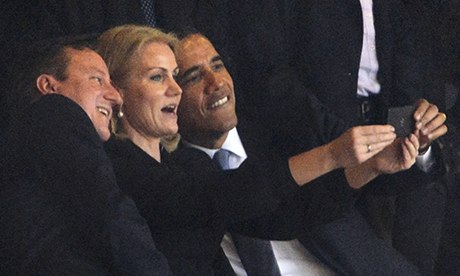
This article is an article about how a tumblr user/guardian journalist has decided to 'retire' from his tumblr blog of funeral selfies due to the infamous Obama selfie at Nelson Mandela's funeral ceremony. The journalist states that as soon as it was released on twitter/instagram that his twitter followers quickly tweeted him about the incident. The journalist states that his blog consists of many teens posing at funerals and that he didn't expect world leaders to do such a thing.
My opinion on this is that it was incredibly disrespectful for the world leaders to have done such a thing but they did do it as a photo of celebration of the life of Nelson Mandela. The new and digital media angle on this is how global followers all tweeted the same journalist about this event and that he posted the photo a.s.a.p with the rise of new and digital media we are able to communicate so much more faster.
How has news changed in the last 20 years?
How has news changed in the last 20 years and who has benefitted the most? Audiences or institutions?
Over the last 20 years News has changed from being most viewed by audiences of a newspaper to audiences of TV and now audiences on the internet. Since the creation and rise of the internet newspapers have seen a fall in sales and circulation which has led to many newspapers offering their newspapers for free and giving them out at train stations etc. such as the newspaper Metro. This then allows Metro to charge their advertisers more due to their circulation being higher as more people are likely to pick up a free newspaper instead of buying one. Newspaper have also moved online to attract a wider range of audiences. Some newspapers online believe that news should be free so they tend to use online more than an actual print copy which may possibly be charging audiences to view their paper. Even though this is the majority belief, some newspaper do have pay-walls on their sites to prevent audiences from viewing their content or some of their content. For TV we use to use teletext to get news but now we have catch up TV and channels, we have smart TV with online uses and also have the red button news which is sort of a replacement for teletext. TV has also seen arrivals of 24hour news channels which has attracted mass audiences especially when a huge televised event occurs e.g. The royal wedding, Birth of Prince George or horrific events such as 9/11 which gave live updates to billions of viewers. Audiences also tend to gain their information from a wide range of sites on the internet including social networking sites such as Facebook and twitter.Usually the death of a celebrity or some shocking event tends to be first discovered by many over twitter through either family members of the victim, the victim themselves, journalist or from viral UGC. The increase number of people with smartphones and internet has allowed a lot of citizen journalism to occur which benefits both the audience and institutions as the institutions get the chance to showcase a video of an event which they wouldn't have captured themselves as they weren't there and this therefore benefits audiences because they get to have a wider view of an incident instead of just what the institutions capture.
Over the last 20 years News has changed from being most viewed by audiences of a newspaper to audiences of TV and now audiences on the internet. Since the creation and rise of the internet newspapers have seen a fall in sales and circulation which has led to many newspapers offering their newspapers for free and giving them out at train stations etc. such as the newspaper Metro. This then allows Metro to charge their advertisers more due to their circulation being higher as more people are likely to pick up a free newspaper instead of buying one. Newspaper have also moved online to attract a wider range of audiences. Some newspapers online believe that news should be free so they tend to use online more than an actual print copy which may possibly be charging audiences to view their paper. Even though this is the majority belief, some newspaper do have pay-walls on their sites to prevent audiences from viewing their content or some of their content. For TV we use to use teletext to get news but now we have catch up TV and channels, we have smart TV with online uses and also have the red button news which is sort of a replacement for teletext. TV has also seen arrivals of 24hour news channels which has attracted mass audiences especially when a huge televised event occurs e.g. The royal wedding, Birth of Prince George or horrific events such as 9/11 which gave live updates to billions of viewers. Audiences also tend to gain their information from a wide range of sites on the internet including social networking sites such as Facebook and twitter.Usually the death of a celebrity or some shocking event tends to be first discovered by many over twitter through either family members of the victim, the victim themselves, journalist or from viral UGC. The increase number of people with smartphones and internet has allowed a lot of citizen journalism to occur which benefits both the audience and institutions as the institutions get the chance to showcase a video of an event which they wouldn't have captured themselves as they weren't there and this therefore benefits audiences because they get to have a wider view of an incident instead of just what the institutions capture.
Thursday, 23 January 2014
Article: Who killed the newspaper?
http://www.economist.com/node/7830218
This article in the economist is arguing that the newspaper industry is dying but we shouldn't allow it to. Newspapers are seen as the professional journalism written professionally and researched professionally, it's also monitored and checked and tries to provide as much of the truth as possible without stepping over the line. Newspapers are also arguably the only news platform that is able to take politicians into court and have a lot of hard facts to back themselves up. An online blogger who is sitting at home in his armchair isn't really going to have enough money or time or circulation of their blog to provide everyone with potentially true facts and aren't going to be able to be big enough to take on a major story about politicians. Without newspapers Governments will be able to get away with a lot more than they possibly could be getting away with at the moment. However, the decline of newspapers isn't something to be too worried about. Newspapers who do investigate stories which benefit society are in a good position of surviving, as long as the owners do a good job of adjusting to changing circumstances. The article also states that to help survive some major newspapers such as the New York Times and Wall Street Journal should put their prices up to compenstate for the loss of advertising due to the rise of the internet and also because they attract a global readership. Another reason to why and how they will survive is thanks to non-profit groups such as NewAssignment.Net who want to combine amateurs and professionals to produce investigative stories on the internet, however even some companies such as CraigsList is supporting this idea even though they were the ones considered as the ones who destroyed the newspapers.
My opinion, I agree that the newspaper industry is dying but I believe it is something to panic about. Newspapers at the current moment in time are important to investigating important news stories with hard evidence and facts which they can take people to court over. Even though non-profit organisations are funding professional and non-professional journalist I believe it would be a short term response. The internet is growing more and more with new bloggers and citizen journalist writing their own opinions and trying to investigate their own news, they are therefore still places to get news from but not all of it will be reliable and some of it won't be able to investigate huge stories.
This article in the economist is arguing that the newspaper industry is dying but we shouldn't allow it to. Newspapers are seen as the professional journalism written professionally and researched professionally, it's also monitored and checked and tries to provide as much of the truth as possible without stepping over the line. Newspapers are also arguably the only news platform that is able to take politicians into court and have a lot of hard facts to back themselves up. An online blogger who is sitting at home in his armchair isn't really going to have enough money or time or circulation of their blog to provide everyone with potentially true facts and aren't going to be able to be big enough to take on a major story about politicians. Without newspapers Governments will be able to get away with a lot more than they possibly could be getting away with at the moment. However, the decline of newspapers isn't something to be too worried about. Newspapers who do investigate stories which benefit society are in a good position of surviving, as long as the owners do a good job of adjusting to changing circumstances. The article also states that to help survive some major newspapers such as the New York Times and Wall Street Journal should put their prices up to compenstate for the loss of advertising due to the rise of the internet and also because they attract a global readership. Another reason to why and how they will survive is thanks to non-profit groups such as NewAssignment.Net who want to combine amateurs and professionals to produce investigative stories on the internet, however even some companies such as CraigsList is supporting this idea even though they were the ones considered as the ones who destroyed the newspapers.
My opinion, I agree that the newspaper industry is dying but I believe it is something to panic about. Newspapers at the current moment in time are important to investigating important news stories with hard evidence and facts which they can take people to court over. Even though non-profit organisations are funding professional and non-professional journalist I believe it would be a short term response. The internet is growing more and more with new bloggers and citizen journalist writing their own opinions and trying to investigate their own news, they are therefore still places to get news from but not all of it will be reliable and some of it won't be able to investigate huge stories.
Wednesday, 15 January 2014
Broadcast
BBC
The crown (publicly owned)
Founder(s): John Reith and George Villiers
Revenue: £5.086 (2011/12)
News channels: BBC News, BBC Parliament, BBC World News, BBC Red Button, BBC News 24
BskyB
Rupert Murdoch
Revenue: £6.791 billion (2012)
Operating Income: £1.243 billion (2012)
Net Income: £970 million (2012)
Parent company/Holding company (a company or firm that owns other companies' outstanding stock.): 21st century fox
News channels: Sky News, Fox News
ITV
Owned by: ITV Plc, STV Group plc, UTV Media plc
Audience Share:
- ITV = 14.0%
- ITV+1 = 1.0%
- ITV HD = 1.4%
(December 2013, BARB)
News: ITV News
Channel 4
Channel four television corporation
News: Channel 4 News
Audience Share:
- Channel 4 = 4.9%
- Channel 4+1 = 0.9%
(October 2013, BARB)
Print
BskyB
Rupert Murdoch
Revenue: £6.791 billion (2012)
Operating Income: £1.243 billion (2012)
Net Income: £970 million (2012)
Parent company/Holding company (a company or firm that owns other companies' outstanding stock.): 21st century fox
Newspapers: The Times, Sunday Times, The Sun
Guardian Media Group
C.P. Scott
Revenue: £254.4 million
Newspapers: The Guardian
Daily Mail and General Trust
Editor: Paul Dacre
Political alignment: Conservative
Newspapers: Daily Mail
Circulation: 1,863,151 (January 2013)
Telegraph Media Group
Editor: Tony Gallagher
Political Alignment: Centre-right conservative
Circulation: 541,036 (Feb 2013)
Newspaper: Daily Telegraph
Trinity Mirror
Editor: Lloyd Embley
Political Alignment: Labour
Circulation: 1,058,488
Newspapers: Daily mirror
E-media
BBC
The crown (publicly owned)
Founder(s): John Reith and George Villiers
Revenue: £5.086 (2011/12)
E-media: BBC News online
BskyB
Rupert Murdoch
Revenue: £6.791 billion (2012)
Operating Income: £1.243 billion (2012)
Net Income: £970 million (2012)
Parent company/Holding company (a company or firm that owns other companies' outstanding stock.): 21st century fox
News channels: Sky News, Fox News
Yahoo
Founders: Jerry Yang and David Filo
Revenue: US$ 4.98 Billion (2012)
Operating Income: US$ 566 Million (2012)
Net Income: US$ 3.94 Billion (2012)
Total assets: US$ 17.10 Billion (2012)
Total Equity: US$ 14.56 Billion (2012)
News: Yahoo News
Google
Larry Page, Sergey Brin
Revenue: US$ 50.18 Billion (2012)
Operating Income: US$ 12.76 Billion (2012)
Profit: US$ 10.74 Billion (2012)
Total Assets: US$ 93.80 Billion (2012)
Total Equity: US$ 71.72 Billion (2012)
News: Google News, through Google search
Twitter
Founders: Jack Dorsey, Noah Glass, Evan Williams, Biz Stone
Revenue: US$ 317 Million (2012)
Users: 200 Million (active Feb 2013)
Facebook
Mark Zuckerburg
Revenue: US$5.1 Billion (2012)
Operating Income: US$ 538 Million (2012)
Net Income: US$ 53 Million (2012)
Total Assets: US$ 15.10 Billion (2012)
Total equity: US$ 11.75 Billion (2012)
Users: 1.19 Billion (active september 2013)
BBC
The crown (publicly owned)
Founder(s): John Reith and George Villiers
Revenue: £5.086 (2011/12)
News channels: BBC News, BBC Parliament, BBC World News, BBC Red Button, BBC News 24
BskyB
Rupert Murdoch
Revenue: £6.791 billion (2012)
Operating Income: £1.243 billion (2012)
Net Income: £970 million (2012)
Parent company/Holding company (a company or firm that owns other companies' outstanding stock.): 21st century fox
News channels: Sky News, Fox News
ITV
Owned by: ITV Plc, STV Group plc, UTV Media plc
Audience Share:
- ITV = 14.0%
- ITV+1 = 1.0%
- ITV HD = 1.4%
(December 2013, BARB)
News: ITV News
Channel 4
Channel four television corporation
News: Channel 4 News
Audience Share:
- Channel 4 = 4.9%
- Channel 4+1 = 0.9%
(October 2013, BARB)
BskyB
Rupert Murdoch
Revenue: £6.791 billion (2012)
Operating Income: £1.243 billion (2012)
Net Income: £970 million (2012)
Parent company/Holding company (a company or firm that owns other companies' outstanding stock.): 21st century fox
Newspapers: The Times, Sunday Times, The Sun
Guardian Media Group
C.P. Scott
Revenue: £254.4 million
Newspapers: The Guardian
Daily Mail and General Trust
Editor: Paul Dacre
Political alignment: Conservative
Newspapers: Daily Mail
Circulation: 1,863,151 (January 2013)
Telegraph Media Group
Editor: Tony Gallagher
Political Alignment: Centre-right conservative
Circulation: 541,036 (Feb 2013)
Newspaper: Daily Telegraph
Trinity Mirror
Editor: Lloyd Embley
Political Alignment: Labour
Circulation: 1,058,488
Newspapers: Daily mirror
E-media
BBC
The crown (publicly owned)
Founder(s): John Reith and George Villiers
Revenue: £5.086 (2011/12)
E-media: BBC News online
BskyB
Rupert Murdoch
Revenue: £6.791 billion (2012)
Operating Income: £1.243 billion (2012)
Net Income: £970 million (2012)
Parent company/Holding company (a company or firm that owns other companies' outstanding stock.): 21st century fox
News channels: Sky News, Fox News
Yahoo
Founders: Jerry Yang and David Filo
Revenue: US$ 4.98 Billion (2012)
Operating Income: US$ 566 Million (2012)
Net Income: US$ 3.94 Billion (2012)
Total assets: US$ 17.10 Billion (2012)
Total Equity: US$ 14.56 Billion (2012)
News: Yahoo News
Larry Page, Sergey Brin
Revenue: US$ 50.18 Billion (2012)
Operating Income: US$ 12.76 Billion (2012)
Profit: US$ 10.74 Billion (2012)
Total Assets: US$ 93.80 Billion (2012)
Total Equity: US$ 71.72 Billion (2012)
News: Google News, through Google search
Founders: Jack Dorsey, Noah Glass, Evan Williams, Biz Stone
Revenue: US$ 317 Million (2012)
Users: 200 Million (active Feb 2013)
Mark Zuckerburg
Revenue: US$5.1 Billion (2012)
Operating Income: US$ 538 Million (2012)
Net Income: US$ 53 Million (2012)
Total Assets: US$ 15.10 Billion (2012)
Total equity: US$ 11.75 Billion (2012)
Users: 1.19 Billion (active september 2013)
Monday, 13 January 2014
New and Digital Media Article 3: UK entertainment spending increasing
http://www.theguardian.com/media/2014/jan/01/uk-entertainment-spending-film-music-streaming

The article states that the UK entertainment spending has increased thanks to the rise of online streaming of music and movies from Netflix, LoveFilm and iTunes etc.
streams and subscriptions rises to £621m, and number of tracks streamed doubles to 7.4bn
Online streaming fuelled a 40% increase in spending on digital videos with downloads
The change to digital viewing led to more than 6.8% fall in the sales of physical DVDs to £1.4bn, reversing a five year decline in total video sales, which managed 3.7% growth to £2.06bn last year
Skyfall was the biggest-selling DVD in the UK in 2013, shifting 2.96m copies
My opinion on this is that streaming has opened up a more convenient and cheap way for consumers and customers to buy certain products such as a movie or a song. However, this idea of streaming has led to an increase of illegal downloading and illegal streaming. So even though the sales have risen in the long term the businesses will be affected as they would be losing potential sales
Subscribe to:
Posts (Atom)